 English

【Pet Care】My Pet Has a Wound—Can They Take a Bath or Play in Water?
Bathing your pet or letting them play in the water is a joyful routine for many owners. However, open wounds make water exposure dangerous. Direct water contact causes acute pain, tissue maceration, and severe bacterial infection. In addition, dense, wet fur traps moisture, creating an optimal environment for microbial proliferation and delaying recovery.
Minor, Superficial Abrasions:
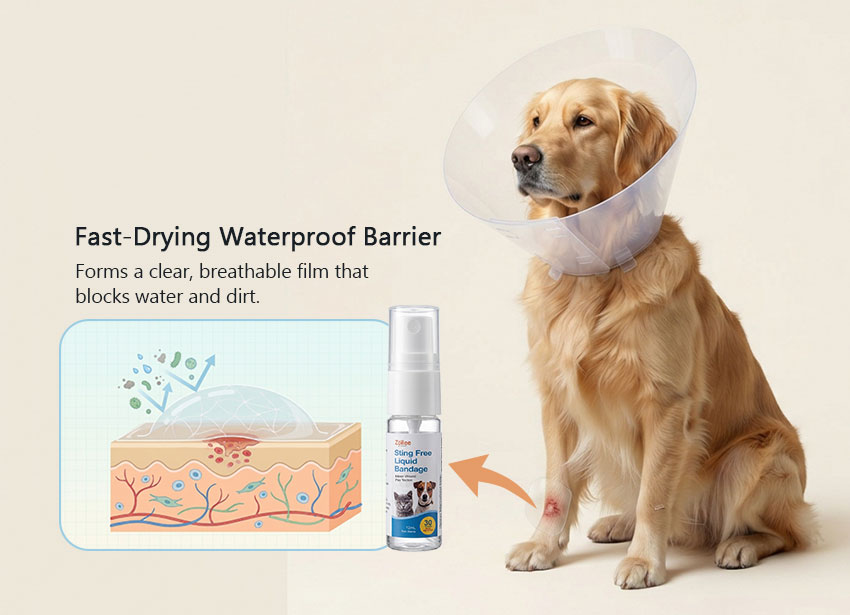
If brief water protection is needed during cleaning, never use alcohol-containing human liquid bandages, as alcohol induces acute pain and cellular damage. Instead, use an alcohol-free, non-stinging, waterproof barrier film containing hexamethyldisiloxane (HMDS), such as Zollee Liquid Bandage. It rapidly dries into a transparent, breathable, and waterproof elastomeric film that blocks water and contaminants. Keep an Elizabethan collar on your pet for 30–60 seconds during application to allow the film to set undisturbed.
Surgical Sutures, Deep Lacerations, or Exudating Wounds:
Full baths, soaking, and swimming are strictly prohibited until sutures are removed and healing is verified by a veterinarian. External liquid barrier films cannot completely seal deep margins or fur shafts against water intrusion. Follow veterinary guidance to spot-clean around the area, ensuring the wound bed remains dry and sterile.
- Related Products
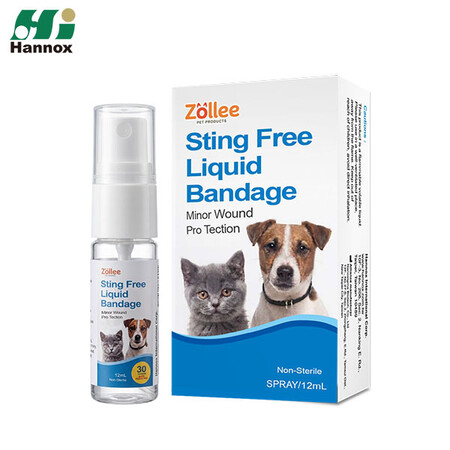
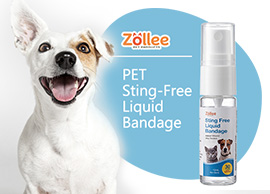
Pet Sting Free Liquid Bandage
PET-SB30
Hannox delivers comprehensive contract manufacturing, private labeling (OBL), and custom OEM solutions. This non-pharmacological formulation is for Pet Sting Free Liquid Bandage and Barrier Sprays. Formulated with an alcohol-free, non-stinging siloxane matrix and produced under an ISO 13485 medical device quality management system, our liquid bandage establishes an immediate, breathable, and waterproof physical shield across compromised animal skin.